
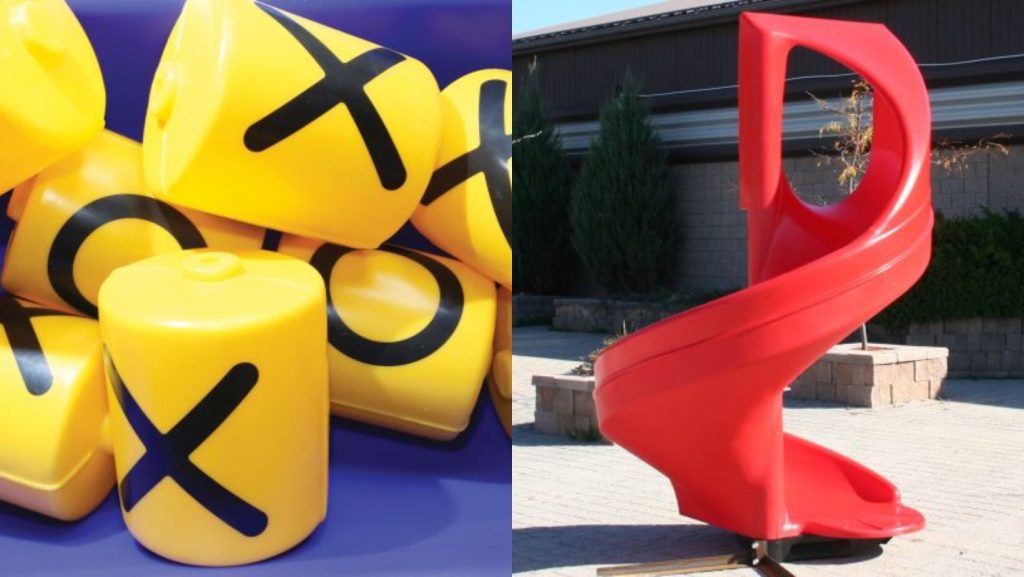
Designing custom plastic parts comes with challenges. Products must meet performance requirements, fit unique environments, and remain cost-effective to manufacture. Many plastic manufacturing methods place limits on shape, wall thickness, or material choice, which can force compromises early in the design process. Rotational molding removes many of those limitations, offering a level of flexibility that few other processes can match.
From complex shapes to built-in features and scalable production, rotational molding gives manufacturers more control over how a part is designed, produced, and refined. That flexibility is one of the main reasons rotational molding continues to be a preferred solution for custom plastic parts across industrial, commercial, and outdoor applications.
What Flexibility Means in Custom Plastic Manufacturing
Flexibility in plastic manufacturing goes beyond design freedom. It includes how easily a product can be modified, how materials perform in real-world conditions, and how production adapts as demand changes.
A flexible manufacturing process allows:
- Design adjustments without extensive retooling
- Control over strength, weight, and durability
- Customization without excessive cost increases
- Scalability from prototype to production
Rotational molding addresses all of these factors, making it well suited for custom projects where requirements evolve or vary by application.
Design Freedom Without Complex Tooling
One of the biggest advantages of rotational molding is the ability to create complex, hollow shapes without high pressure or intricate tooling. Because the process relies on heat and rotational movement rather than force, parts form evenly inside the mold.
This allows for:
- Complex geometries that are difficult with other methods
- Hollow parts without internal stress points
- Smooth internal and external surfaces
- Easier design changes compared to injection molding
Designers can focus on function rather than working around process limitations, which leads to better-performing products.
Custom Wall Thickness and Structural Control
Rotational molding allows precise control over wall thickness throughout a part. Thickness can be increased in high-stress areas and reduced where less material is needed, all within a single mold.
This level of control provides:
- Improved structural integrity
- Reduced material waste
- Better impact resistance
- Lightweight designs without sacrificing strength
Uniform wall thickness also helps prevent warping and weak points, resulting in parts that perform consistently over time.
Material Versatility for Different Applications
Rotational molding supports a wide range of polyethylene resins and specialty materials. This versatility makes it possible to tailor parts for specific environments and performance needs.
Material options can support:
- UV resistance for outdoor use
- Chemical resistance for industrial settings
- Impact resistance for high-use products
- Long-term durability in extreme temperatures
Choosing the right material early in the design process ensures the final product performs as intended throughout its lifespan.
Built-In Features That Simplify Assembly
Another area where rotational molding excels is the ability to mold functional features directly into the part. This reduces the need for secondary operations and simplifies assembly.
Common molded-in features include:
- Threaded inserts and mounting points
- Handles, ribs, and structural reinforcements
- Openings, channels, and recesses
- Branded elements and identification features
Integrating these features improves consistency, reduces labor, and lowers the risk of assembly errors.
Custom Finishes, Colors, and Textures
Rotational molding allows color and texture to be incorporated directly into the molding process rather than added afterward. This creates durable finishes that won’t chip, peel, or fade easily.
Customization options include:
- Solid or custom color matching
- Smooth or textured surfaces
- Molded logos and branding
- Decorative or functional finishes
These options provide aesthetic flexibility while maintaining performance and durability.
Scalable Production From Prototypes to Full Runs
Rotational molding is well suited for both low-volume and mid-volume production, making it ideal for custom projects that may scale over time.
Benefits of scalable production include:
- Lower tooling costs compared to other molding methods
- Easier transitions from prototype to production
- Cost-effective runs without high minimum quantities
- Flexibility for seasonal or evolving product lines
This scalability allows businesses to refine designs without committing to large production volumes too early.
Real-World Applications That Benefit From Flexibility
Rotational molding is used across a wide range of industries where durability, customization, and performance matter.
Common applications include:
- Industrial containers and enclosures
- Agricultural and outdoor equipment components
- Recreational and playground products
- Commercial storage and transport solutions
In each case, flexibility in design and material choice allows products to meet specific environmental and functional demands.
Conclusion
Rotational molding offers unmatched flexibility in custom plastic parts by removing common design limitations and supporting customization at every stage of production. From complex shapes and built-in features to scalable runs, this process allows manufacturers to create durable, functional products without unnecessary compromise.
When flexibility matters, rotational molding provides the freedom to design smarter, adapt faster, and produce parts that perform in real-world conditions.
SPI Plastics supports custom rotational molding projects from concept through production, offering experienced guidance, quality manufacturing, and reliable results. Explore our rotational molding resources or connect with our team to discuss your next project.