

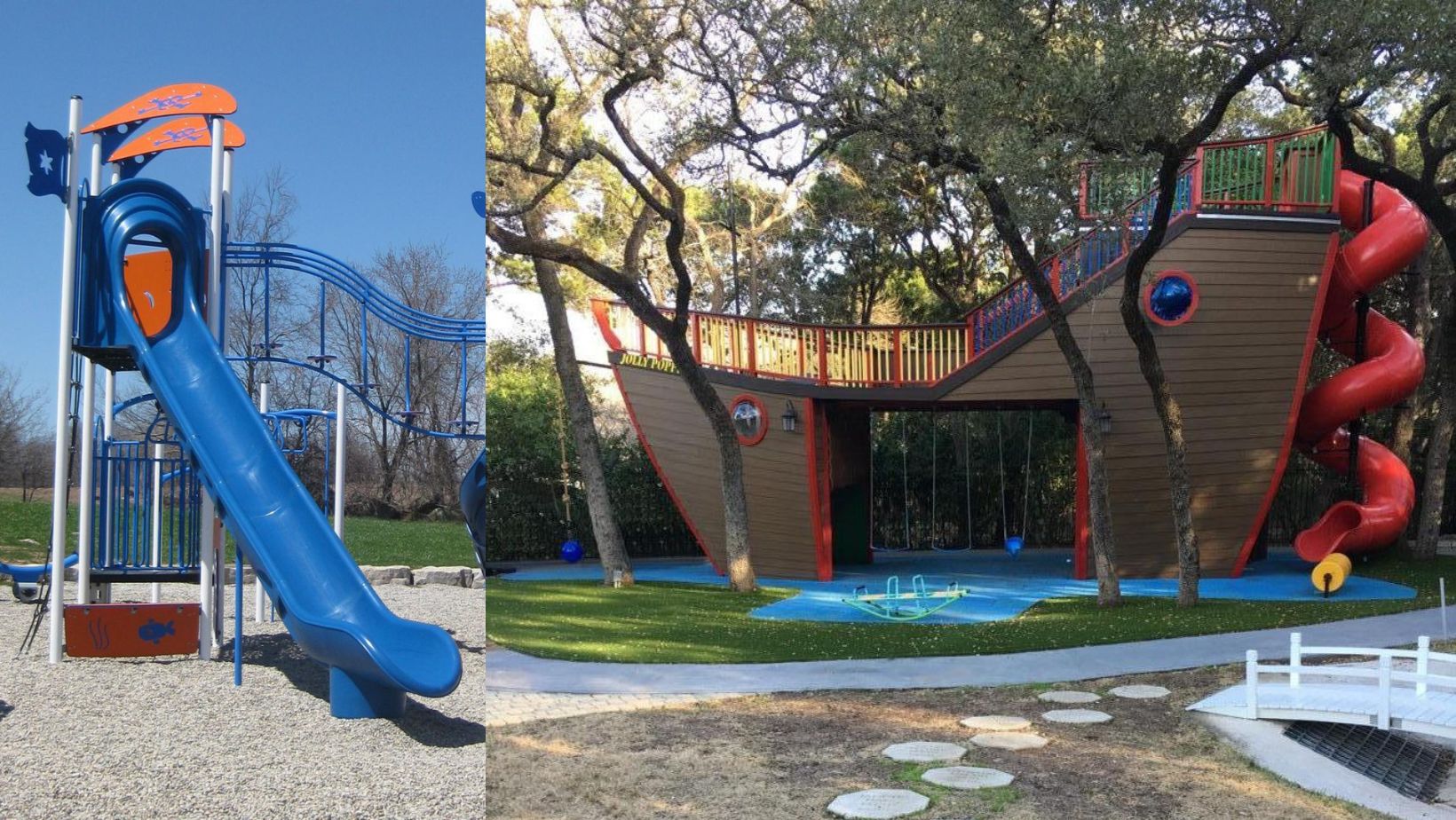
A great playground gives children more than something to do. It creates a space where they can move, explore, solve problems, make friends, and build confidence through play. That means designing a complete play area takes more thought than simply choosing a large structure with a slide.
The right mix of outdoor playground equipment should offer several ways to play. Some children will head straight for the tallest climber, while others may prefer swings, imaginative activities, sensory panels, or a quieter place to interact with friends. Although every site is different, most successful playgrounds include a balance of physical, social, creative, and inclusive play opportunities.
What Equipment Should Be Included in an Outdoor Playground
Most outdoor play areas should include equipment that supports climbing, sliding, swinging, balancing, sensory exploration, and imaginative play.
Not every playground needs the same number of components. The final design should reflect the size of the property, the expected number of users, the ages of the children, and the goals of the organization managing the space.
Climbing Equipment That Offers Different Challenges
Climbing is often one of the first activities children look for when they arrive at a playground. It encourages them to use their arms and legs together while developing balance, coordination, strength, and spatial awareness.
Common climbing features include:
- Climbing walls
- Rope nets
- Ladders
- Overhead climbers
- Stepping platforms
- Arched or curved climbers
The level of difficulty matters. A low climber with larger handholds may suit younger children, while older children may be ready for taller structures, more complex routes, or overhead equipment.
Providing more than one climbing option can also make the playground easier to use during busy periods. Children can choose a route that matches their confidence instead of waiting for a single ladder or access point.
Slides for Different Ages and Comfort Levels
Slides are a familiar part of most playgrounds, but they are not all the same. Height, width, shape, and entry point can significantly change the experience.
A playground may include straight slides, curved slides, tube slides, or wider side-by-side slides. Smaller structures often work well for toddlers and preschool-aged children, while school-aged children may enjoy taller or faster options.
Slides should also fit naturally into the overall layout. The landing area should not interfere with children running between activities, and access points should not create unnecessary congestion on platforms.
Swings and Other Motion-Based Equipment
Swinging provides a type of movement that climbing and sliding cannot. It can support coordination, balance, body awareness, and sensory development while giving children the freedom to control their own speed.
There are several swing styles to consider, including:
- Belt swings
- Toddler or bucket swings
- Accessible swing seats
- Group swings
- Tire-style swings
Other motion-based features may include spring riders, gliders, spinners, rocking equipment, and see-saws. Because these components move beyond their fixed footprint, they require proper clearance and careful placement within the site.
Swings are popular, but they are not automatically required for every project. The available space, budget, age groups, and intended use should determine whether a separate swing area makes sense.
Balance and Coordination Activities
Not every physical challenge needs to involve height. Balance equipment can help children develop coordination and confidence while remaining closer to the ground.
Balance beams, stepping stones, links, log rolls, and low-level circuits can be used individually or as pathways between other activities. These features give children a chance to test their skills at their own pace.
They can also help bridge the gap between younger children who are still developing coordination and older children looking for a more complex obstacle course.
Imaginative and Social Play Features
Physical movement is only one part of a well-rounded playground. Children also need space to communicate, make up games, and use their imagination.
Playhouses, themed structures, storefront panels, steering wheels, counters, tunnels, and gathering platforms can become almost anything during a child’s game. A counter may be a restaurant one day and a ticket booth the next.
Open-ended features are particularly valuable because they don’t dictate one specific activity. Children can reuse the same space in different ways, which helps keep the playground interesting over time.
Social areas also give children a place to pause, talk, and join group games. This is important for children who may not want to spend their entire visit climbing or running.
Sensory Equipment That Encourages Exploration
Sensory play features give children opportunities to explore sound, texture, movement, and cause and effect.
These may include:
- Musical panels
- Talk tubes
- Textured surfaces
- Turning gears
- Activity panels
- Sand or water play features
- Interactive ground-level components
Sensory equipment can support focused exploration and quieter play. It may also help children who enjoy hands-on activities or need a break from the faster pace of other parts of the playground.
These features work best when they are integrated into the full design instead of being placed in a separate corner as an afterthought.
Inclusive Playground Equipment
An accessible route into the play area is important, but true inclusion goes further. Children should have meaningful ways to participate once they reach the equipment.
Inclusive playground equipment may include accessible swings, ramps, transfer platforms, sensory panels, musical features, ground-level activities, and group equipment that children can use together.
Ground-level components are especially useful because they allow children with different mobility needs to interact without always transferring onto an elevated structure. Side-by-side activities can also encourage shared play instead of separating children based on ability.
The strongest inclusive designs consider mobility, sensory processing, communication, and different levels of physical confidence from the beginning of the planning process.
Shade, Seating and Supporting Site Features
The play components may be the main attraction, but supporting features affect how comfortable and practical the space is for everyone.
Depending on the site, planners may also consider:
- Benches
- Picnic tables
- Shade structures
- Accessible pathways
- Waste containers
- Bike racks
- Fencing or defined boundaries
Seating should be positioned where parents, caregivers, teachers, and staff can maintain clear sightlines. Shade can make the space more comfortable during warm weather and give children a place to rest between activities.
These items are not technically commercial playground equipment, but they help turn a group of play components into a functional community space.
Equipment for Different Age Groups
Playground equipment for different age groups should reflect how children move, reach, climb, and assess risk at each stage of development.
Younger children generally need:
- Lower platforms
- Smaller steps
- Shorter slides
- Larger handholds
- Clear and manageable pathways
Older children may be ready for:
- Taller climbers
- More challenging overhead activities
- Complex routes
- Higher slides
- Equipment that requires greater strength and coordination
Mixed-age sites may benefit from separate play zones. These zones can remain visually connected so caregivers can supervise more than one child while each age group uses equipment designed for its abilities.
Age-appropriate design doesn’t mean removing all challenge. Children need opportunities to test their skills. The goal is to provide challenges that are manageable rather than overwhelming.
How To Choose the Right Equipment for Your Playground
There is no universal list of must have playground equipment that will work for every park, school, childcare centre, or community space.
Before selecting individual components, consider:
- The ages and abilities of the children
- The number of expected users
- The amount and shape of the available space
- Supervision and visibility
- Accessibility
- Maintenance requirements
- Available budget
- Plans for future expansion
It’s also important to think about the playground as one connected environment. A site with ten pieces of equipment that all offer the same type of activity may provide less play value than a smaller playground with a thoughtful variety of movement, sensory, and social experiences.
Common Playground Planning Mistakes
One of the most common mistakes is choosing equipment based mainly on appearance. Colour and style matter, but they should not replace considerations such as age range, flow, challenge level, accessibility, and how children will actually use the space.
Other planning mistakes include:
- Including too many similar activities
- Overcrowding the property
- Forgetting about supervision sightlines
- Designing for only one age group
- Adding inclusive features near the end of the project
- Failing to account for space around moving equipment
- Relying on one large structure without ground-level activities
Careful planning can improve the experience without necessarily adding more equipment. Sometimes a better layout or a more varied selection creates greater play value than simply filling every available section of the property.
Create an Outdoor Play Area With More Ways To Play
The best playgrounds are not always the ones with the tallest structures or the greatest number of components. They are the ones that give children different ways to move, explore, interact, and build confidence.
Selecting the right types of playground equipment requires a clear understanding of the site, the children who will use it, and how each activity fits into the larger design. When age ranges, accessibility, circulation, supervision, and long-term use are considered together, the result is a playground that works better for children and the people caring for them.
SPI Plastics can help you select and plan outdoor play equipment based on your available space, target age groups, project goals, and budget. Contact us today to discuss your project and begin creating a playground designed for active, inclusive, and engaging play.