
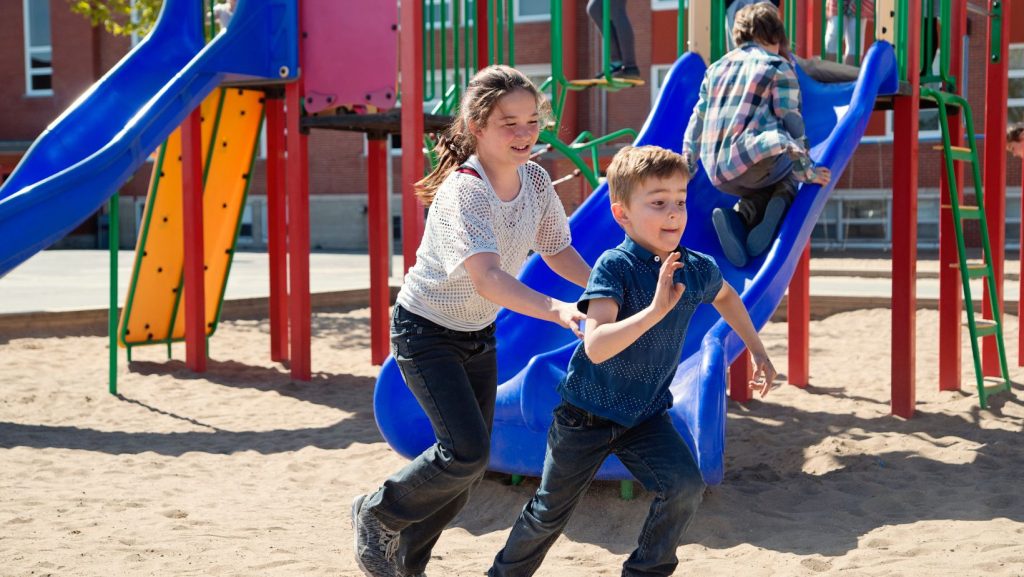
In a world where schedules are full and screens are everywhere, unstructured outdoor play has become one of the most valuable — and overlooked — parts of childhood. Unlike organized sports or adult-led activities, unstructured outdoor play gives children the freedom to explore, create, and move on their own terms.
This type of play doesn’t just burn energy. It teaches lifelong skills that support physical development, emotional resilience, creativity, and social growth. When children are given time and space outdoors, especially in thoughtfully designed playgrounds, learning happens naturally.
What Is Unstructured Outdoor Play
Unstructured outdoor play is play that is child-led rather than adult-directed. There are no rules to follow, no goals to achieve, and no instructions being given. Children decide what to play, how to play, and when to move on to something new.
Examples include climbing playground structures, inventing games with friends, pretending equipment is part of a larger story, or simply running, exploring, and experimenting with movement. This freedom is what allows real learning to take place.
Physical Skills Developed Through Unstructured Outdoor Play
When children play freely outdoors, their bodies are constantly adapting and responding to new challenges. Climbing, swinging, balancing, and running all help develop strength, coordination, and motor skills.
Outdoor environments naturally encourage larger movements than indoor spaces. Uneven surfaces, varied heights, and open areas help children build spatial awareness and confidence in how their bodies move. Over time, these experiences improve balance, endurance, and overall physical health.
Social Skills Learned Without Adult Direction
Some of the most important social skills children develop happen when adults step back. During unstructured outdoor play, children learn how to communicate, negotiate, and work through disagreements on their own.
They take turns, create rules together, resolve conflicts, and decide who leads and who follows. These interactions help children develop empathy, cooperation, and problem-solving skills that are difficult to teach in structured settings.
Emotional Growth and Confidence Building
Unstructured play allows children to test limits in a safe, natural way. Choosing whether to climb higher, jump farther, or try something new teaches children how to assess risk and trust their own judgment.
When children fall, fail, or struggle — and then try again — they build resilience. Each small success strengthens confidence and emotional regulation, helping children manage frustration and build independence.
Cognitive and Creative Development Through Free Play
Outdoor play environments encourage creativity because they don’t dictate how they should be used. A climbing structure can become a mountain, a ship, or a castle. Open-ended play sparks imagination and critical thinking.
Children problem-solve constantly during unstructured play. They figure out how to navigate obstacles, adapt games, and invent new ways to use their surroundings. These experiences support early cognitive development and reinforce learning through exploration rather than instruction.
The Role of Outdoor Playgrounds in Unstructured Play
Well-designed outdoor playgrounds are essential for encouraging meaningful unstructured play. The best playgrounds are not overly restrictive or single-purpose. Instead, they offer a variety of elements that invite exploration, movement, and creativity.
Thoughtful playground design considers different ages, abilities, and play styles. Layout, flow, and equipment selection all influence how children interact with the space and with each other. When designed properly, outdoor playgrounds become environments where children naturally learn through play.
Why Outdoor Playgrounds Matter More Than Ever
As screen time continues to rise, outdoor playgrounds offer something technology cannot — real movement, real interaction, and real-world learning. Outdoor play supports both physical and mental health, helping children release energy, manage stress, and stay engaged with their surroundings.
Communities, schools, and childcare centers that invest in outdoor playgrounds are investing in healthier, more confident children who are better prepared for lifelong learning.
How to Support Unstructured Outdoor Play
Encouraging unstructured outdoor play is crucial for a child’s development. Here’s how you can support it:
- Make time for free play. Set aside dedicated time where children can play freely without a predetermined schedule or outcome.
- Choose the right environment. Opt for playgrounds and outdoor spaces that are designed to spark curiosity and exploration, offering a variety of play equipment and natural elements.
- Trust the process. Understand that children learn best when they lead their own play. Resist the urge to direct every moment and instead, allow them the freedom to explore, experiment, and even make mistakes on their own.
Create a Playground That Supports Real Learning
If you’re interested in creating a custom outdoor playground designed to support unstructured play, child development, and long-term use, SPI Plastics can help. With experience designing and manufacturing high-quality playground equipment, SPI Plastics creates outdoor play spaces that encourage exploration, creativity, and connection.
Contact SPI Plastics to start designing a custom outdoor playground that helps children learn, grow, and thrive through play.
Frequently Asked Questions
What is unstructured outdoor play
Unstructured outdoor play is child-led play that has no set rules or instructions. Children decide how and what they play, allowing them to explore freely and learn naturally.
Why is unstructured outdoor play important for child development
Unstructured outdoor play supports physical, social, emotional, and cognitive development. It helps children build confidence, problem-solving skills, creativity, and social awareness.
How do outdoor playgrounds support unstructured play
Outdoor playgrounds provide open-ended equipment and environments that encourage children to explore, climb, imagine, and interact with others without rigid guidelines.
How much unstructured outdoor play do children need
While needs vary by age, experts generally agree that children benefit from daily opportunities for unstructured outdoor play whenever possible.
Are outdoor playgrounds better than indoor play spaces
Outdoor playgrounds offer more space for movement, exposure to fresh air, and opportunities for physical and social development that are harder to replicate indoors.