

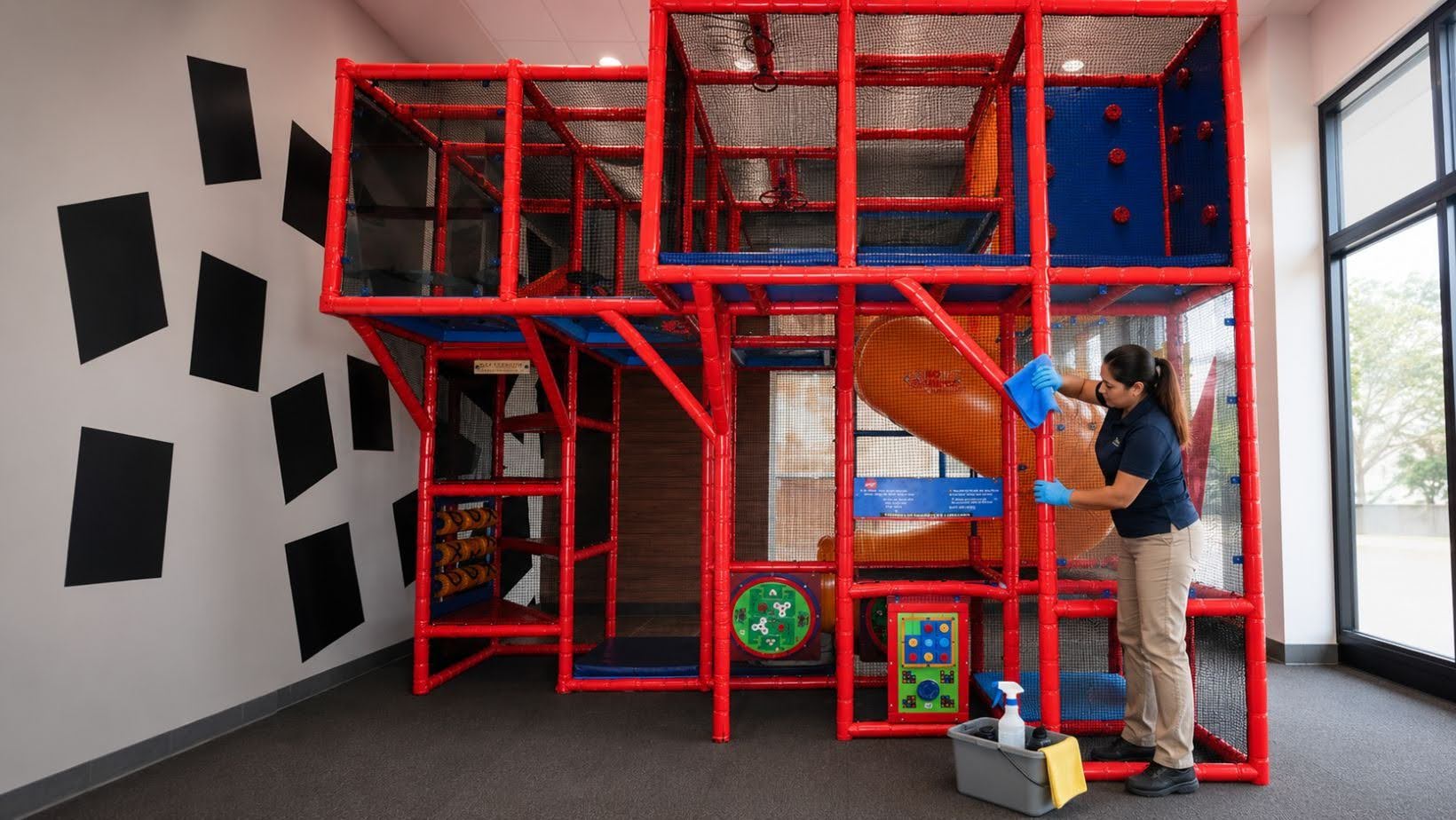
An indoor playground doesn’t get much rest. During a busy day, children may climb the same steps, race through the same tunnels and use the same slide over and over again. Commercial equipment is made for this repeated activity, but that doesn’t mean it’s maintenance-free.
Consistent indoor playground equipment maintenance can help prevent avoidable damage and keep individual components working as intended. The most effective approach is to follow the manufacturer’s care instructions, inspect equipment regularly, clean each material correctly and address wear before it spreads.
Why Everyday Equipment Care Matters
Normal wear is expected in any busy indoor playground. The rate at which it develops depends on several factors, including how often the equipment is used, the types of activities it supports and how quickly small issues are corrected.
A loose component, small tear or worn connection may seem minor at first. If it’s ignored, however, continued use can place more strain on that component and the surrounding structure. Prompt attention can often keep a manageable issue from becoming a larger repair.
Consistent indoor playground equipment care also helps preserve the appearance of your play space. Parents may not see every inspection or repair, but they will notice equipment that looks clean, well maintained and cared for.
Create a Preventive Maintenance Routine
Waiting until something breaks is rarely the best approach. A preventive routine gives your team a clear process for finding wear early and completing necessary maintenance.
Begin with the instructions supplied by your equipment manufacturer. Different components and materials may have their own inspection and care requirements. These instructions should form the foundation of your playground maintenance checklist.
The frequency should reflect your facility, traffic levels and equipment. A large play centre that welcomes hundreds of children each week may need to examine certain areas more often than a smaller facility with lighter use.
Responsibilities should also be clearly assigned. Staff need to know what they are expected to check, how to report a concern and who decides what happens next.
Keep a Record of Inspections and Repairs
A written maintenance history makes it easier to see how your equipment is changing over time. It can also reveal patterns that might be missed when each issue is considered separately.
Your records can include:
- The date of each inspection
- The components and areas reviewed
- Damage or wear that was identified
- Photographs of developing concerns
- Maintenance and repairs completed
- Replacement components that were ordered
- The date each issue was resolved
For example, records may show that one entrance, slide exit or climbing feature experiences more wear than other parts of the playground. You can then monitor that area more closely and plan for future maintenance.
Clean Each Material Properly
Cleaning protects the appearance of your playground, but using the wrong method can cause unnecessary wear. Indoor playgrounds can include molded plastic, vinyl-covered foam, netting, webbing, clear panels and several types of flooring. One cleaning product may not be appropriate for all of them.
Abrasive tools can scratch surfaces. Unsuitable chemicals may affect finishes or coverings. Too much moisture can also cause problems if it reaches areas that are difficult to dry.
Always follow the cleaning instructions provided by the manufacturer. Staff should understand which products and tools are suitable for each part of the playground. Spills, food residue and other debris should also be addressed promptly before they become harder to remove.
Watch for Early Signs of Wear
Effective indoor playground equipment inspections involve more than looking for components that are already broken. Staff should learn to recognize changes that may indicate a developing problem.
Areas to monitor include:
- Loose or missing hardware
- Tears in vinyl coverings or protective padding
- Worn netting, webbing or straps
- Cracks or changes in plastic components
- Damage around entrances and slide exits
- Shifting or worn flooring
- Components that feel or function differently than usual
If an issue could affect the proper use of the equipment, restrict access to that component or area until it has been assessed. When the correct response is unclear, contact the manufacturer or playground installer for guidance.
Make Repairs Before Damage Spreads
Continued use can turn a small maintenance concern into a more extensive repair. Prompt action can protect both the affected component and the equipment connected to it.
Avoid temporary solutions that change how the playground was designed to function. The repair should follow the manufacturer’s instructions and use compatible materials or components. Indoor playground replacement parts should fit the existing system and be installed correctly.
After a repair, examine the surrounding area as well. Damage in one location may have placed additional pressure on nearby connections, coverings or supports.
Reduce Avoidable Wear During Daily Operations
Not all equipment care happens during a scheduled inspection. The way your playground is managed each day can also affect its longevity.
Facility rules can help reduce unnecessary damage. Depending on your equipment and business, these may include keeping food and drinks outside designated play areas, using components only as intended and preventing access to sections that have been closed for maintenance.
Staff supervision matters too. Employees should be prepared to address equipment misuse and report concerns immediately. Removable play items should be returned to their proper locations, and areas undergoing cleaning or repair should remain unavailable until they are ready for use.
These simple habits are an important part of how to make indoor playground equipment last longer.
Know When Replacement Is the Better Option
There is no universal lifespan for commercial indoor playground equipment. Material quality, frequency of use and maintenance history all influence how long a component remains suitable for use.
Repair may not always be the best long-term decision. Replacement or a larger update may make more sense when:
- Damage cannot be properly repaired
- The same issue continues to return
- Compatible parts are no longer available
- Repairs are becoming increasingly frequent
- The equipment no longer supports how the space is used
- The business is ready to expand or refresh its playground
An equipment manufacturer can help you evaluate the existing system and understand what can be repaired, replaced or updated.
Help Your Indoor Playground Last Longer
The lifespan of a playground is not determined by equipment quality alone. What happens after installation matters too. A consistent maintenance routine helps owners understand how their equipment is wearing, respond to concerns earlier and plan updates before problems become more extensive.
SPI Plastics designs and manufactures customizable indoor playground equipment for businesses. We can help you plan a new play space, select compatible components or explore options for updating an existing playground. Contact SPI Plastics to discuss equipment that supports your space, customers and long-term plans.