
A parent shifts their chair to see around a column. A staff member walks around the play structure to check a hidden corner. Small visibility problems become much more noticeable when an indoor playground gets busy. Good indoor playground supervision starts with a space that makes children easier to see and adults better able to respond.
Equipment placement, seating and clear routes all influence how manageable supervision feels throughout the day. These details deserve attention when planning a new playground, but reviewing an existing space can also reveal useful improvements.
Plan Your Layout Around Indoor Playground Supervision
An exciting play structure needs to work within the building around it. Columns, walls and nearby furniture can affect what adults see, even when the equipment itself offers good visibility.
Before approving an indoor playground layout, review it from the places caregivers and staff will actually use. Check the view from seating, entrances and designated monitoring positions.
Identify Blind Spots Early
A blind spot is an area hidden from a particular viewing position. It might be behind a solid panel, around a corner or where two structures overlap.
Ask your equipment supplier to help assess visibility into elevated sections and enclosed features. For an existing playground, walk around the structure and note where children disappear from view. That information can help you decide where adults need to position themselves or move during supervision.
Keep Routes to Children Clear
Seeing a child who needs help is only part of the task. An adult also needs a suitable way to reach them.
Keep circulation routes free of stored supplies, chairs and other obstructions. During planning, discuss access to enclosed and elevated areas with your supplier, including how staff can reach a child who becomes upset or needs assistance.
Choose Indoor Playground Equipment With Visibility in Mind
When comparing indoor playground equipment, look beyond the number of slides and climbing features. Consider how the component choices affect views into the structure.
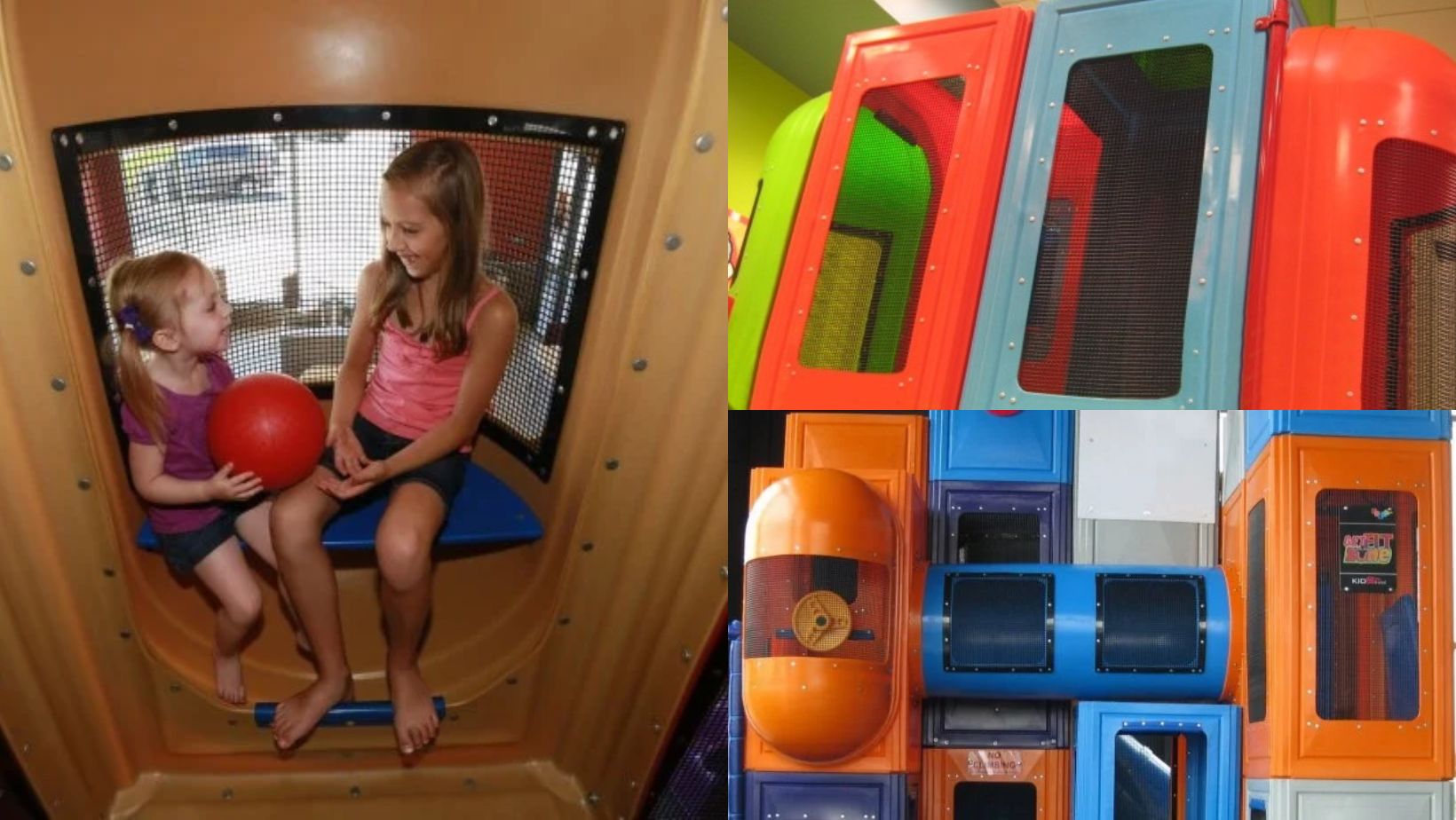
Viewing windows, transparent panels and suitable mesh sections can help adults follow play. Their placement matters, though. A window facing a wall offers little benefit to someone supervising from the other side.
SPI Plastics’ Mega Towers, for example, incorporate slotted panels, bubble windows and Lexan panels to support visibility. Review how features like these will work within your proposed layout.
For existing equipment, speak with the supplier before changing panels or components. Any alteration needs to preserve the structure’s intended safety features.
Position Caregiver Seating Where It Supports Supervision
A comfortable seating area is useful only if caregivers can still follow their children’s activities. A chair that looks well placed on a floor plan may offer a poor view once someone sits down.
Test visibility at seated eye level. Check whether tables, signs or decorations block important views. Consider providing seating near different play zones so caregivers can stay close to the area their child is using.
Keep seating outside circulation routes and away from slide exits. Make it clear that caregivers may need to move as their children explore. One chair is unlikely to offer a complete view of every part of a larger playground.
Organize Play Zones to Make Movement Easier to Follow
Clearly arranged play areas help families understand where activities belong. They also help staff identify locations that need closer attention.
Give Toddlers a Clearly Defined Space
Toddlers and older children move differently. A designated toddler area makes it easier to provide suitable equipment and monitor interactions among smaller children.
Make the area’s boundaries easy to recognize and display the equipment’s age and size recommendations where families can see them. Keeping older, larger children out of toddler sections gives younger children space to explore without faster moving play passing through.
Watch Busy Entry and Exit Points
Popular features can draw queues that interrupt nearby play. Observe where children wait, where they change direction and whether routes cross at awkward points.
Pay particular attention to slide exits. Children shouldn’t linger in front of an exit or climb up a slide, where they could collide with someone coming down. Keep seating and unrelated activities away from these areas.
If congestion keeps developing in the same spot, discuss the layout with your equipment supplier.
Support Indoor Playground Supervision With Clear Daily Practices
A thoughtful layout gives your team a useful starting point. Consistent routines help them put it to work.
Make indoor playground supervision part of staff training, including which areas each person monitors and how coverage continues during breaks. Explain caregiver responsibilities when families arrive so expectations are clear.
A short daily review can include:
- Checking that signs, party decorations and movable furniture haven’t blocked views.
- Keeping viewing panels clean using the manufacturer’s instructions.
- Clearing walkways and access points.
- Checking that play area rules remain visible.
- Reviewing coverage before busy sessions or group visits.
Include daily equipment checks in your routine to spot structural defects, vandalism and litter that need attention. These checks help keep the space ready for use, while active supervision helps your team respond to what’s happening during play.
Discuss Your Indoor Playground Layout With SPI Plastics
Clear views, accessible routes and thoughtful equipment placement can make everyday supervision more manageable. Reviewing these details early helps you choose a layout that works for children, caregivers and staff.
SPI Plastics can help you find indoor playground equipment suited to your space and the children who’ll use it. Contact SPI Plastics to discuss your project. Share your floor plan, photographs and any visibility concerns, and let’s explore equipment and design options for your play area.